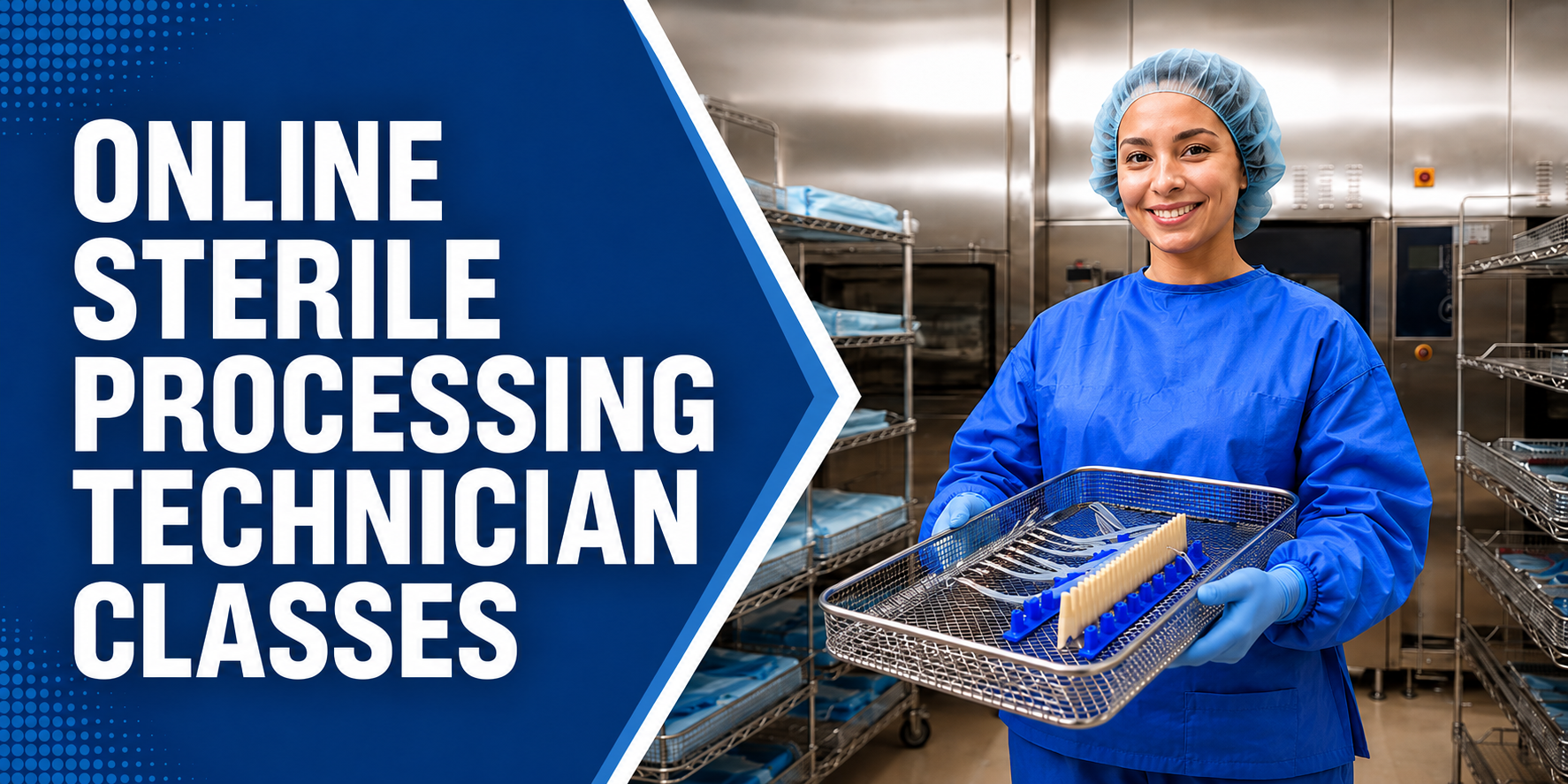
Online Sterile Processing Technician Classes
See if you qualify for Sterile Processing Technician programs
Answer a few questions in 2 minutes. Free, no commitment.
The classroom side of sterile processing training moves online cleanly. Infection control, decontamination, sterilization methods, instrument identification, and exam prep all translate to a screen, and most people finish that coursework in two to four months.
What does not move online is the part that trips people up: the hands-on hours. The most recognized credential, CRCST, requires 400 hours of supervised experience in an actual sterile processing department, and no online class can hand you those. Those hours happen through a placement or externship in a real department, which some programs help you arrange and others leave to you. Medical equipment preparers, the federal category this work falls under, earn a median of $47,700 a year, so it pays to get the path right before you commit to a program.
This page compares the online sterile processing technician classes worth considering, including what they cost, which certification each one prepares you for, and where those required hours come from.
What Sterile Processing Technicians Earn
Pay for this role clusters in the low-to-mid $40,000s nationally, with room to move up through certification, shift differentials, and experience. The federal data tracks sterile processing under medical equipment preparers, and the May 2025 figures put the median at $47,700 a year, which works out to about $22.93 an hour or $3,975 a month.
Those are national midpoints, not a floor or a ceiling. Actual pay shifts with your state, your metro, your employer, the shift you work, and whether you hold a credential. Treat the number as one input for comparing programs, alongside cost and certification fit, rather than a promise of what you will earn.
For the wider outlook, the same federal category reported about 76,500 jobs in 2024, roughly 10% projected growth through 2034, and around 10,900 openings a year on average, with a high school diploma as the typical entry point.
How to Choose an Online Program
The best program is not the fastest or the cheapest by default; it is the one that lines up with the credential your state and employer expect and gives you a real plan for the hands-on hours. Speed matters least here, because sterile processing rewards accuracy, and rushing the part that keeps patients safe helps no one.
When you compare the options above, weigh five things:
- Certification fit: does it prepare you for the credential your employers actually list, CRCST or CSPDT?
- The hands-on plan: does the program coordinate your 400 hours, or leave them to you?
- Total cost: tuition plus books, exam vouchers, and fees, not just the sticker price.
- Schedule: self-paced, instructor-supported, or cohort-based, matched to how you actually work.
- Support: exam prep, advising, and clear answers when you email a question.
If arranging hours locally sounds easier than going fully remote, comparing sterile processing classes near me can surface programs with built-in clinical placements. When two options look similar on paper, the tie-breaker is usually the hands-on plan, because that is the step that most often stalls online students.
Frequently Asked Questions
Do employers accept an online sterile processing certification?
Employers hire on the credential, not on where you took the classes. What they look for is a recognized certification, usually CRCST or CSPDT, which means you passed the exam and met the hands-on requirement. An online program that prepares you for one of those exams is treated the same as an in-person one, as long as you complete the same certification steps.
How much does the CRCST certification exam cost?
HSPA charges a flat $140 for the CRCST written exam, the same for members and non-members. That fee is separate from your program tuition, so factor it into your total cost. Some bootcamp-style programs bundle the exam voucher into their price, which is worth checking when you compare options.
Can you self-study for the sterile processing exam instead of taking a class?
It is possible, and it works best if you already have sterile processing experience to draw on. Beginners usually struggle without a structured program, because the material covers technical vocabulary, infection control, instrument identification, and documentation that are hard to absorb in isolation. Either way, if you are going for CRCST, the 400 hands-on hours are still required.
Are online sterile processing programs accredited?
Accreditation and certification are two different things. Some online programs are offered through accredited institutions, while others are training providers whose value is in preparing you for the certification exam. The credential you earn, CRCST or CSPDT, carries the weight with employers, so confirm which exam a program prepares you for and check the certifying body's requirements directly.
How fast can you become a sterile processing technician?
The coursework itself can take just a few months, and some self-paced programs move faster. The full timeline depends on the hands-on hours: if you pursue CRCST, the 400 required hours can stretch the path well beyond the classroom portion, especially if you have to arrange the placement yourself. Quick coursework does not remove that requirement.
Choosing an Online Sterile Processing Path
The piece worth remembering is simple: online classes get you the knowledge, but the 400 hands-on hours are what actually turn a finished course into a working credential. A program that helps you arrange those hours is usually worth more than one that shaves a few weeks or a few hundred dollars off the price.
That is the lens to shop with. When you are ready, line up the online options on Dreambound and weigh them on placement help first, then cost and format.